Agentic SDLC: A Practical Guide for Modern Teams
Learn what an agentic SDLC is, how it differs from traditional workflows, and how to adopt one with humans, checkpoints, and clear metrics.
In this article
- What an Agentic SDLC Actually Looks Like
- The card keeps moving, the owner changes
- Traditional SDLC vs Agentic SDLC at a Glance
- The Card Journey From Spec to Merged PR
- Product design and technical design first
- Implementation and dual-agent review
- Architecture and Agent Patterns That Hold the Lifecycle Together
- Six layers, one workflow
- Why the board and session model matter
- Governance, Human Checkpoints, and the Dual-Agent Review
- What a checkpoint should stop
- Speed without governance just moves the bottleneck
- Metrics That Separate Real Wins From Vanity Numbers
- Read flow, not volume
- Compare models with evidence
- Common Misconceptions and the Quality Trap
- Early velocity can lie
- Reversible work can stay autonomous
- A Practical Adoption Checklist and Migration Plan
- Stage the rollout
You're already living some version of this. A product manager drops a card, engineering wants a clean spec, design has comments, and review still ends up in a long thread that nobody wants to own. Agentic SDLC changes that shape, but only if the workflow has clear handoffs, hard checkpoints, and a way to catch drift before it becomes rework.
What matters is not whether an agent can write code. It's whether the whole path from product spec to merged PR stays readable, reviewable, and accountable when the executor changes from a person to an orchestrated system. The teams that get this right don't remove humans, they move humans to the decisions that need judgment.
What an Agentic SDLC Actually Looks Like
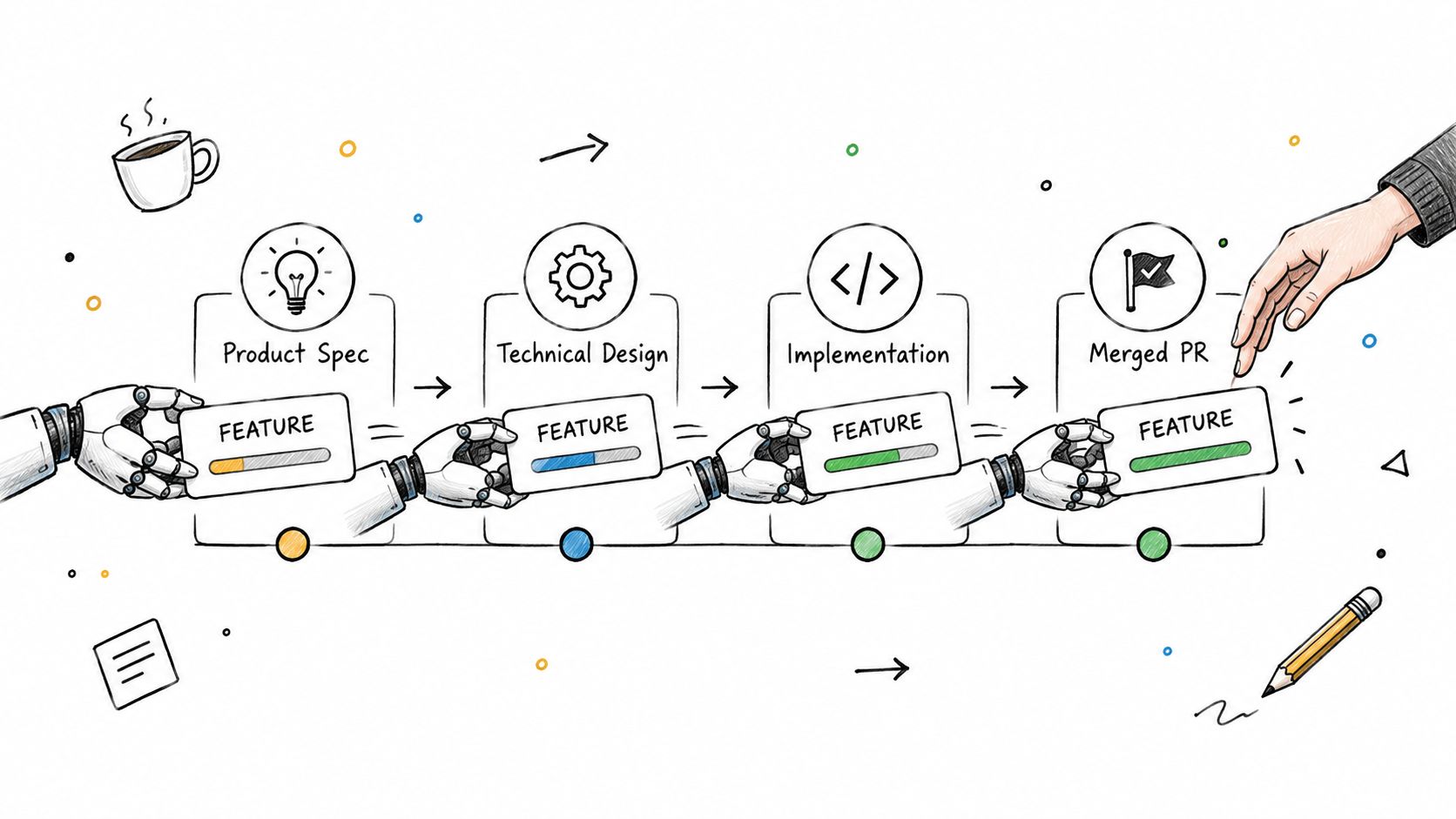
A real agentic SDLC doesn't feel like magic. It feels like a card moving through a board while different agents pick up different parts of the work, and you step in only where judgment matters.
The card keeps moving, the owner changes
The journey starts when a card moves into product design. An interactive session opens, the product design skill asks questions, and a product design document gets created inside the system. You review that document, add annotations, and approve it only after the doc reflects the intent clearly.
Then the card moves to technical design. An agent generates the technical design, you review it the same way, and you approve it only when the design is specific enough to build from. After that, the card moves to implementation, where the worker agent writes code and pushes the work forward.
The key shift is simple. The lifecycle still looks like spec, design, build, review, and ship, but the person is no longer typing through every stage. The system is doing more of the repetitive motion, while the human becomes the reviewer of intent, structure, and risk.
Practical rule: if a stage can't produce a reviewable artifact, it's not ready for autonomy.
That's why the board matters. It gives you a visible state for each card, so the team can see whether work is working, waiting, stuck, or needs you. Without that, agentic work turns into opaque automation fast.
Traditional SDLC vs Agentic SDLC at a Glance
The cleanest way to compare the two models is to look at ownership, approval, drift control, feedback loops, and metrics. The process steps may look familiar, but the control points move.
| Dimension | Traditional SDLC | Agentic SDLC |
|---|---|---|
| Ownership of intent | Product and engineering define intent, then hand work off manually | Humans still own intent, but the board and agents carry the work between stages |
| Ownership of execution | Engineers do most of the implementation and review work | Agents execute product design, technical design, implementation, and first-pass review |
| Approval point | Review often happens late, after code is already written | Approval happens at named checkpoints, including design approval and PR approval |
| Drift detection | Drift is usually found in code review or after implementation | Drift is caught earlier through design review, conformance checks, and review loops |
| Feedback loop | Feedback comes from manual review and retros | Feedback is built into documents, annotations, workflow rules, and analytics |
In a traditional flow, the most expensive surprises often show up late. In an agentic flow, the goal is to catch them earlier by making design artifacts first-class objects, not side notes. That is why human approval still matters, but it moves up the stack.
The strongest teams don't treat this as humans versus machines. They treat it as humans setting direction and agents handling bounded execution. That model also lines up with the broader architecture described for agentic software engineering, where human supervision stays at intent, review, and approval points (reference architecture for agentic software engineering).
The Card Journey From Spec to Merged PR
The best way to understand the workflow is to follow one card all the way through. The path is not abstract, and it shouldn't feel mysterious.
Product design and technical design first
The card starts in product design. The product design agent opens an interactive session, asks clarifying questions, and drafts the product design document. You annotate the doc, request fix rounds if needed, and approve it only when the requirements are crisp enough to support implementation.
Next comes technical design. A technical design agent turns the product intent into architecture, API shape, and data changes. You review that artifact the same way you reviewed the product design, then approve it before any code is written.
That order matters. A specification-first workflow can expose dependency issues and ambiguous requirements before implementation begins, which is much cheaper than discovering them in a half-built PR. It also gives the team one approved source of truth before code generation starts.
Implementation and dual-agent review
Once the design is approved, the card moves to implementation. The implementation agent writes the code and moves the work into review. At that point, a review agent checks the implementation against the approved technical design, then Loupe dispatches a fix agent until the review loop is satisfied.
That dual-agent review is the part that catches spec drift. A single reviewer can miss when the code still “looks right” but no longer matches the design. A separate conformance pass gives the team a second chance to catch design breakage before a human approves the PR.
When the review loop is clean, you approve the pull request and the system merges it. The card moves to done, and the record of the path stays attached to the work item. That traceability matters because it lets you see where the work slowed down and where the fixes happened.
The workflow works best when each stage produces an artifact a human can inspect. If the artifact is missing, the handoff is weak.
Architecture and Agent Patterns That Hold the Lifecycle Together
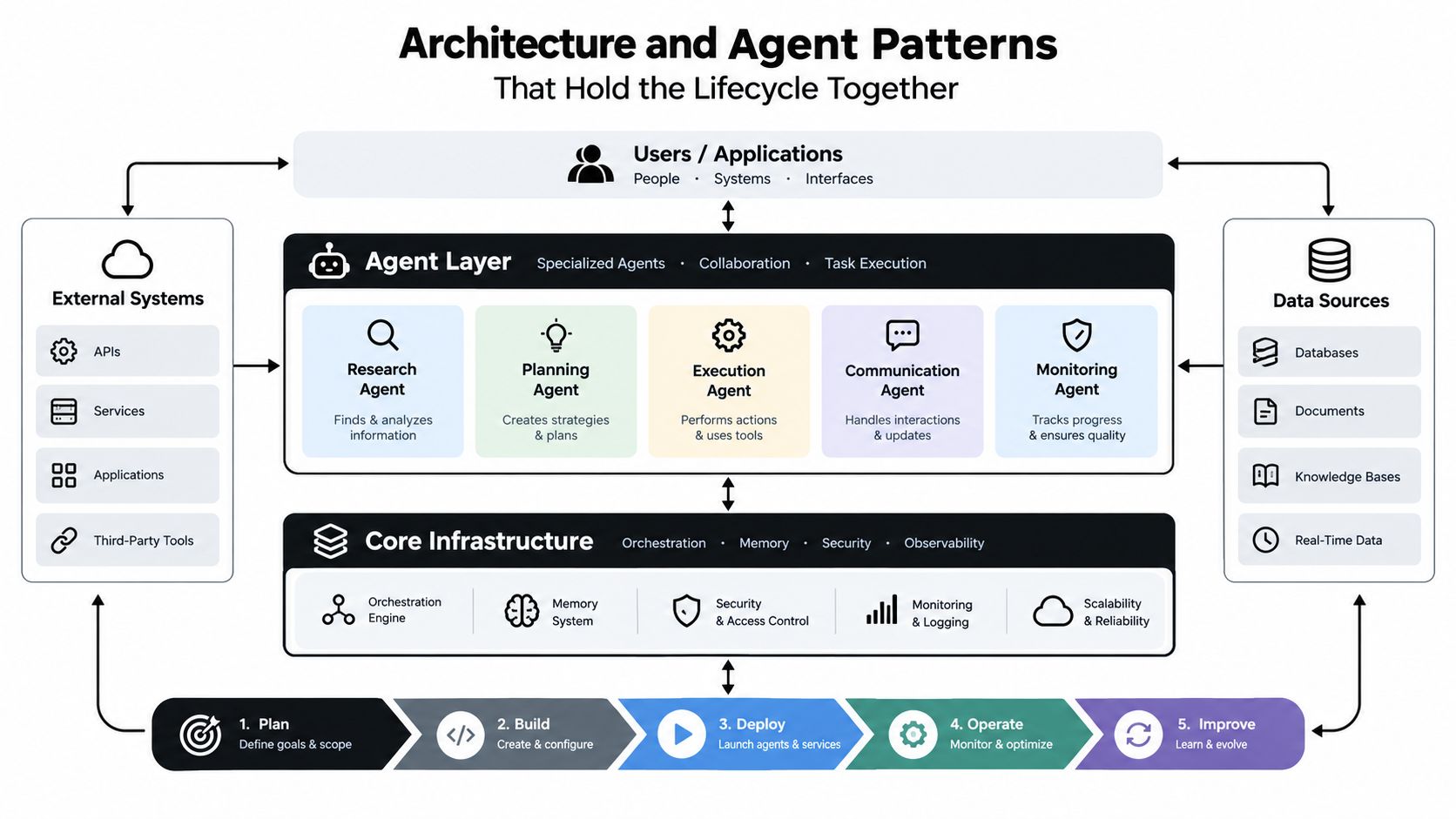
A board alone won't hold agentic delivery together. You need a structure that shows who orchestrates, who executes, who verifies, and where humans step in.
Six layers, one workflow
A practical reference architecture has six layers. The orchestrator coordinates the work. Specialist agents handle product design, technical design, implementation, and review. The tool and model layer gives them the services they need. The shared context layer keeps documents and state aligned. The verification layer checks outputs before they move forward. The human supervision layer sits at intent, review, and approval.
That structure matches how the card journey behaves in practice. The board is the orchestration surface, the documents are the shared context, and the review stage is where verification happens before a human signs off. A single monolithic agent usually starts to fail once the workflow gets messy.
Separate roles are also easier to trust. A 2025 review of multi-agent orchestration systems reported task success of 88% for adaptive orchestration with human involvement, compared with 52% for a single-agent design and 71% for a linear pipeline (multi-agent orchestration review). That pattern matters because failed work can return to a fix loop instead of drifting downstream.
Why the board and session model matter
The board is not just a tracker. It gives the orchestrator a state machine, so each card can move from one agent to another without losing context. Interactive sessions matter for the same reason. They let a human answer a hard question, then hand control back without breaking the thread.
That keeps the workflow practical. The same board can move cards, collect annotations, and keep the conversation attached to the artifact instead of scattering it across chat tools and tickets. For adjacent tooling patterns, the broader discussion in AI code generation tools covers the same control problem from another angle.
A useful test is simple. If a stage does not leave behind an artifact a person can inspect, the handoff is weak.
Governance, Human Checkpoints, and the Dual-Agent Review
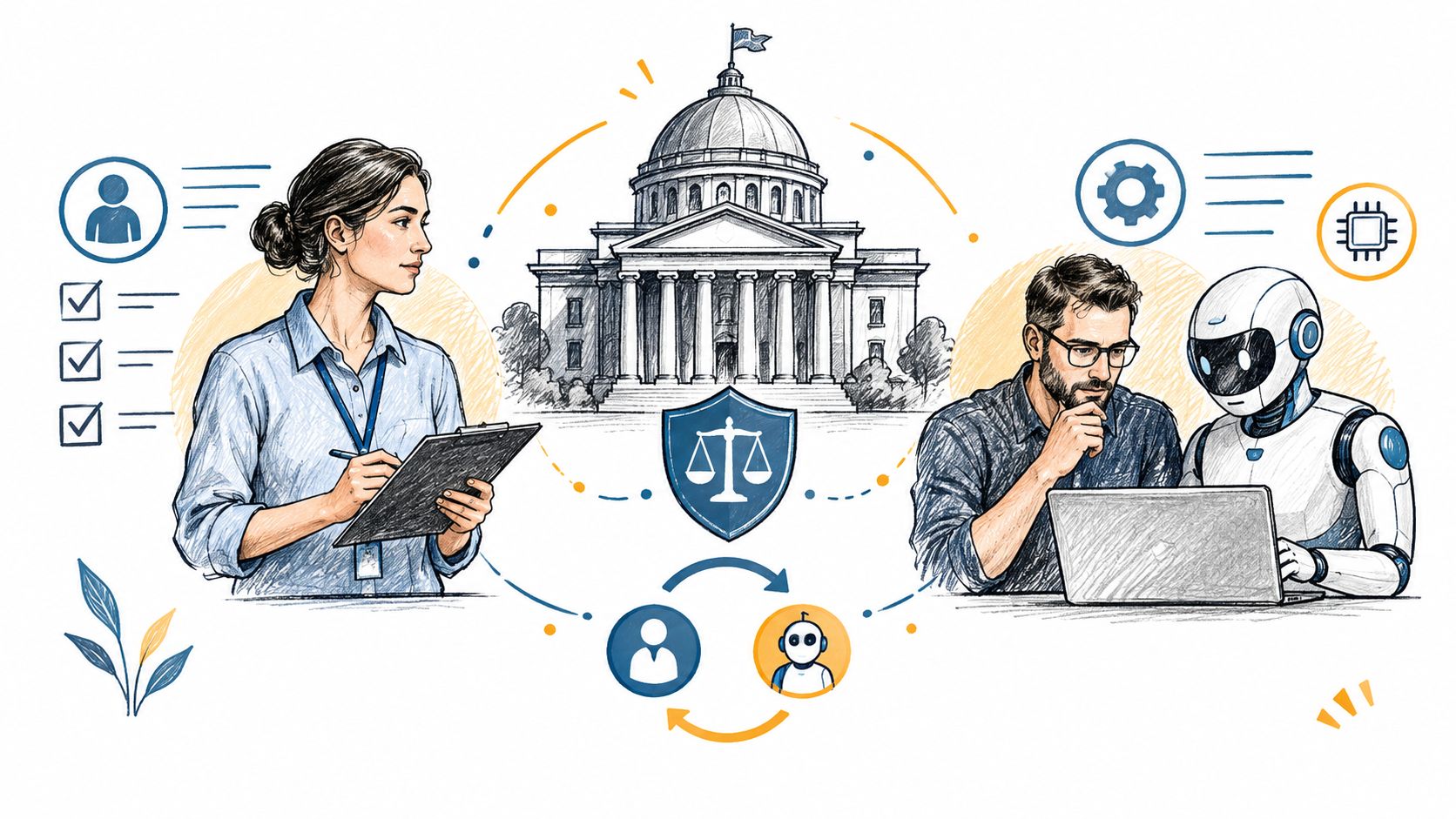
A human checkpoint is only useful if it does real work. It should pause the flow, require evidence, and make one person accountable for the decision.
What a checkpoint should stop
The strongest checkpoints don't just say “review later.” They force the system to surface the artifact, the rationale, and the owner before the next stage begins. That keeps the work from sliding forward on autopilot when the design is weak or the implementation is off target.
The You stages matter here. The product design and technical design phases both pause for human review, and the approval isn't ceremonial. It's the point where a named person decides whether the card has enough evidence to move ahead.
The dual-agent review is the other control. One agent reviews the implementation, another fixes the gaps, and only then does the human see the PR. That separation matters because it catches spec drift before review fatigue sets in.
Speed without governance just moves the bottleneck
There's a common mistake here. Teams see faster generation and assume they've improved delivery. In practice, they may have just pushed the work into a queue that humans now have to validate.
That risk shows up in the delivery data too. DORA's 2024 research linked a 25% increase in AI adoption to better documentation quality, code quality, code-review speed, approval speed, and lower code complexity, but it also linked the same adoption increase to a 1.5% decrease in delivery throughput and a 7.2% reduction in delivery stability, with 39% of respondents reporting little or no trust in AI-generated code (DORA 2024 report summary). The lesson is clear, speed without checks can hollow out the workflow.
Trust is not a feeling. It's a set of gates, evidence, and owners.
Metrics That Separate Real Wins From Vanity Numbers
Once agents start shipping work, the wrong metrics get loud. Lines of code go up, pull requests go up, and everyone starts sounding productive even when the queue is getting worse.
Read flow, not volume
The useful scoreboard is much smaller. Track fix rounds, hours to merge, merge rate, regression rate, and complexity growth. Those numbers tell you whether the work is moving cleanly or just producing more downstream cleanup.
That matters because code generation itself can hide the bottleneck. Analysis across more than 700 software firms and 300 million work events found that introducing coding agents increased lines of code by 30%, commits by 20%, and pull requests by 23%, but also stretched the average pull-request review-to-merge interval by 49%. That is queue amplification, not automatic throughput gain.
Compare models with evidence
Model choice should be an experiment, not a debate. Loupe's analytics make it possible to compare model behavior on the same workflow, so a team can see which setup reduces fix rounds, keeps merge time stable, and avoids a pileup in review. The point is to choose the model that improves the flow, not the one that sounds smartest in a demo.
For cost decisions, teams can pair that workflow data with their own model experiments and cost comparisons. The right question is always the same, does this model reduce rework without hiding a longer tail of cleanup? The broader cost comparison lens is useful here too, especially when you're mapping agent usage to budget discipline (LLM cost comparison notes).
A rising PR count without stable or improving merge time is the warning sign. It usually means the system is pushing more work into review than the reviewers can absorb.
Common Misconceptions and the Quality Trap
The most common mistake is calling agents “faster engineers.” They're not. They're execution systems that can speed up some parts of the lifecycle and still leave you with more maintenance debt later.
Early velocity can lie
The quality trap shows up when teams celebrate short-term speed and skip the long game. A longitudinal study of open-source repositories found that agent adoption produced large, front-loaded velocity gains only when projects had not previously used AI coding tools. Projects with earlier AI-IDE exposure saw minimal or short-lived throughput gains.
The same study also found quality pressure building underneath the speed. Static-analysis warnings rose by roughly 18%, and cognitive complexity increased by about 39%. That's exactly why “faster” can become “harder to maintain” once the novelty fades.
Reversible work can stay autonomous
The practical countermeasure is not to slow everything down. It's to classify the work by risk and reversibility. Low-impact changes can move autonomously, while security, data migration, architecture, accessibility, and user-facing decisions need named human owners and evidence.
That also changes what you instrument. Measure fix rounds, post-merge regressions, deleted or rewritten code, and defect escape rates by agent and task type. Those signals tell you whether autonomy is healthy or whether it's turning into debt.
The contrarian truth is simple. Autonomous execution usually needs more lifecycle instrumentation, not less.
A Practical Adoption Checklist and Migration Plan
Start small and keep the first workflow narrow. One team, one card type, one workflow rule, and one baseline are enough to prove whether the path is working.
Stage the rollout
Begin with product design and technical design only. Add the human review gates, measure fix rounds and hours to merge, and make sure the cards still move cleanly before you add more automation.
Then add the review agent and the fix loop. Once that is stable, open the board to more teams and start comparing models on real work instead of hypothetical tasks. Use the analytics in retros so the team talks about flow, not opinions.
Finally, harden the governance rules. Reversible low-impact changes can proceed autonomously, while security, data, architecture, accessibility, and user-facing decisions should require named owners with evidence. That division keeps autonomy where it helps and slows it where the risk is real.
A controlled study reported that agents increased task correctness by approximately 35% while cutting user effort nearly in half, from 25.1 minutes with copilots to 12.5 minutes with agents (controlled study). That's a strong reason to roll out in stages, not all at once.
If you want this workflow in a real system, Loupe provides the board, the agent handoffs, the document review, the dual-agent review loop, and the metrics to keep it honest. Visit Loupe if you want to see how a card moves from product design to merged PR with human checkpoints built in.
Powered by Outrank tool