8-Step Engineering Design Review Checklist for AI Agents
Use this 8-point engineering design review checklist covering traceability, API contracts, security, tests, observability, and agent-run reviews.
In this article
- 1. Requirements Traceability
- Separate link checks from meaning checks
- 2. Design Conformance to the Approved Spec
- Compare against a fixed version
- 3. Architecture and Scalability
- Review the bottleneck, not the diagram
- 4. Security Review
- Test the forbidden action
- 5. Failure Modes and Error Handling
- Run a compliance pass and a scenario pass
- 6. Testability and Test Strategy
- Define passing before implementation
- 7. Performance and Cost Efficiency
- Measure finished work
- 8. Observability and Maintainability
- Make the failure diagnosable
- How Each Design Review Check Compares
- Run the Checklist on Your Next Card
- Make failed checks change the workflow
A checklist doesn't automatically make a review better. In a distributed software-inspection experiment, checklist-based review showed no statistically significant advantage over ad hoc review in defect detection, effort, or false positives, according to the software-inspection study. The useful question isn't whether reviewers checked boxes. It's whether they checked the right risks and recorded evidence.
Most design reviews miss the same things when teams have no shared review scope. Don't start by blaming lazy reviewers. Start by naming what everyone must inspect, what counts as proof, and who can accept an exception.
This engineering design review checklist follows a fixed order, from requirements to observability. Each check separates what an agent can verify automatically from what still needs a human checkpoint.
In Loupe, that work runs through six stages: product design, tech design, implementation, agent review, live review, and done. A second agent reviews designs and implementation before the human checkpoint, so people can focus on intent, trade-offs, and unresolved risk rather than basic drift.
1. Requirements Traceability
Start with a requirement, then follow it all the way to a test. A link to a design document isn't enough if nobody can show where the behavior is implemented or verified.
NASA's traceability guidance calls for checking links in both directions at lifecycle reviews and documenting gaps before sign-off. That distinction matters: forward links show that requirements have a planned solution. Reverse links help expose behavior that nobody approved.
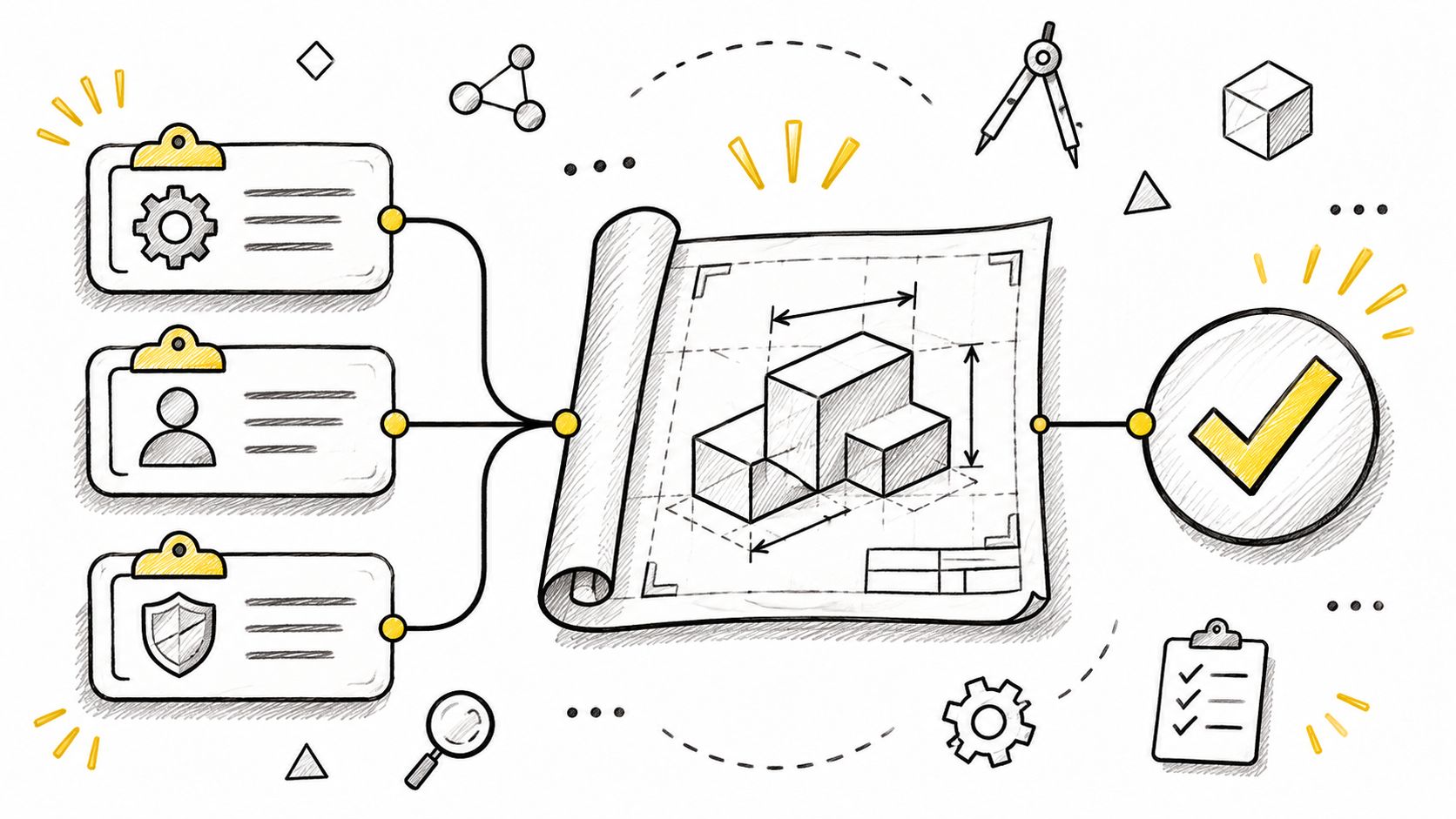
For a password-reset feature, connect the user story to the reset endpoint, token-expiry decision, email behavior, and verification tests. Include abuse controls, not just the successful reset.
Separate link checks from meaning checks
An agent can verify that each requirement has a design reference, implementation reference, test case, and owner. Give it a simple traceability table in the design document, then ask it to flag missing, broken, or outdated references whenever the design changes.
A human must confirm that those references prove the intended behavior. A test named reset_password might check email delivery without checking whether an expired token is rejected.
- Check requirement quality. Replace vague words such as fast or appropriate with a clear acceptance condition.
- Inspect exceptions. Record each missing link with its risk, owner, and required decision.
- Recheck changes. When a requirement changes, review its downstream design and tests.
Pass when the links are valid, not merely present. Don't let an agent invent a missing requirement to make the mapping look complete.
2. Design Conformance to the Approved Spec
Say the approved design returns a background-job identifier, but the implementation holds the request open until the job finishes. Both versions might pass basic tests. They still represent different designs.
Conformance review asks whether the build matches the decision the team approved. Write the technical design document with concrete interfaces, data shapes, states, and error behavior so reviewers can compare evidence instead of guessing intent.
Clear requirements make that comparison easier. The NASA Systems Engineering Handbook recommends concise, unambiguous requirements without indefinite terms.
Practical rule: An intentional deviation belongs in an updated design, not in a reassuring pull-request comment.
Compare against a fixed version
An agent can verify routes, schemas, component states, migrations, and changed files against the approved design revision. It should cite the relevant design section and implementation location for every mismatch, rather than reporting that the change looks compliant.
A human must approve changes to intent. That includes a simpler interaction, a removed edge case, or a different data-retention choice, even when the alternative seems reasonable.
In Loupe, a second agent checks the pull request against the approved design before a human tries the preview during live review. Fix rounds send failed work back for changes.
Keep the review bounded. Don't turn every conformance finding into a request to redesign unrelated code. Either restore the approved behavior or update the design through an explicit decision, then review the affected implementation again.
3. Architecture and Scalability
Start with the simplest structure that meets known needs. A queue, cache, or separate service should solve a stated problem, not serve as decoration in an architecture diagram.
NASA's system-definition review criteria include a credible technical approach, allocated requirements, completed trade-offs, and significant risks with a plan to manage them. For a web application, translate that into component boundaries, data ownership, dependency assumptions, and a plausible growth path.
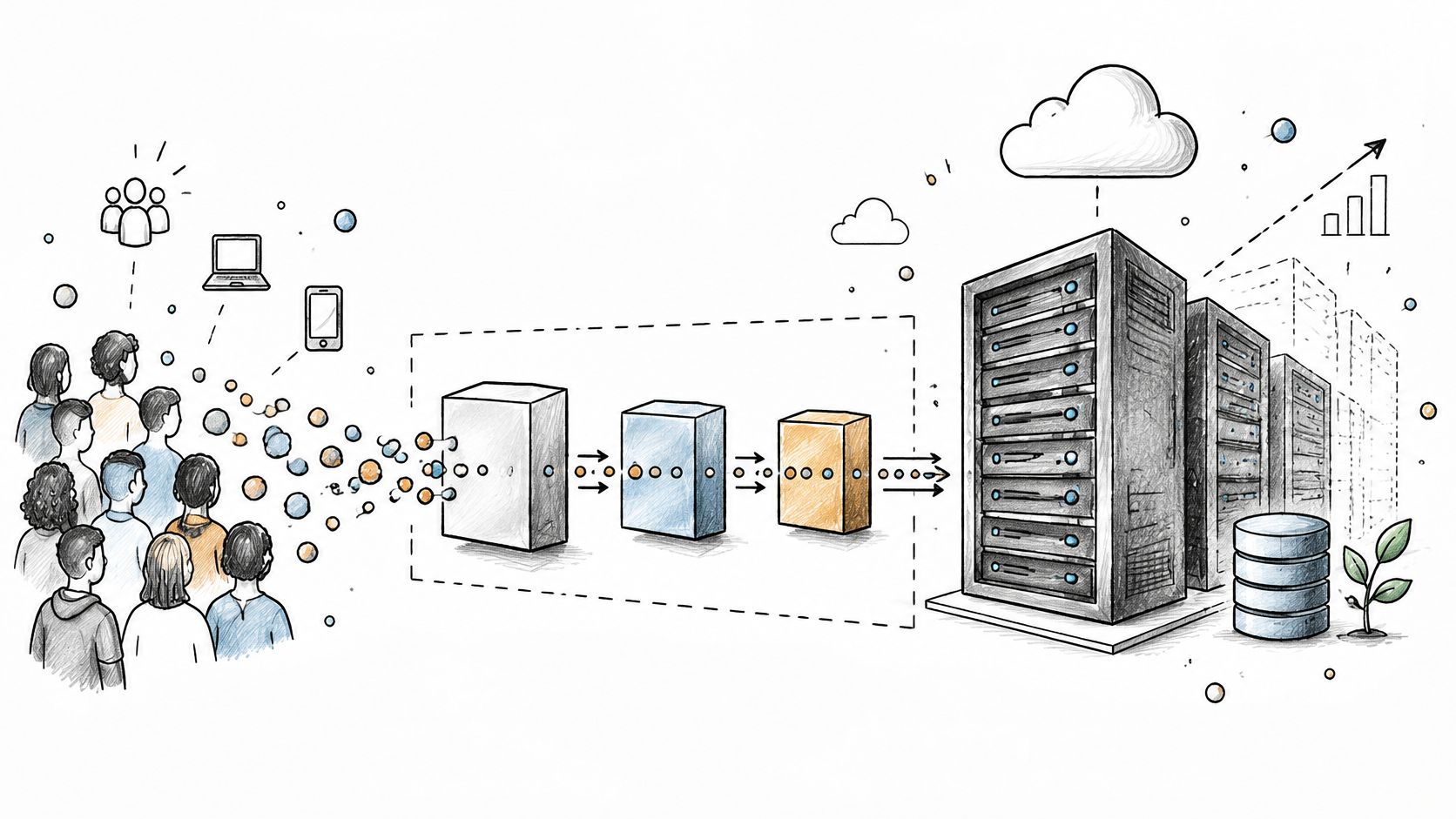
Consider a startup preparing for a launch campaign. Review whether its database queries stay bounded as customer records grow, whether workers compete with web requests, and whether the application can limit expensive work.
- Agent verification. Inspect dependency direction, database access patterns, pagination, queue limits, and load-test evidence. Flag assumptions that have no supporting measurement.
- Human checkpoint. Decide which growth assumptions deserve investment now and which can wait. Accept the operational cost of any new component explicitly.
- Decision record. Write an Architecture Decision Record explaining the choice, rejected alternatives, constraints, and trigger for reconsideration.
Review the bottleneck, not the diagram
A clean diagram doesn't prove that a database can handle the workload. Ask for representative queries and a test plan that reflects expected data shape, request mix, and background jobs.
Don't require a distributed system for hypothetical scale. Prefer a clear boundary inside the existing application when that preserves an affordable path to change. The approval should explain both why the design is sufficient now and what evidence would make the team revisit it.
4. Security Review
Security review starts with who can do what, to which data, under which conditions. Authentication confirms identity. Authorization decides whether that identity may perform the requested action.
For agent-driven work, preserve that distinction during review. VentureBeat's reporting on AI code review highlights the need for explicit review standards; syntactically valid code still needs inspection for intent and system risk.
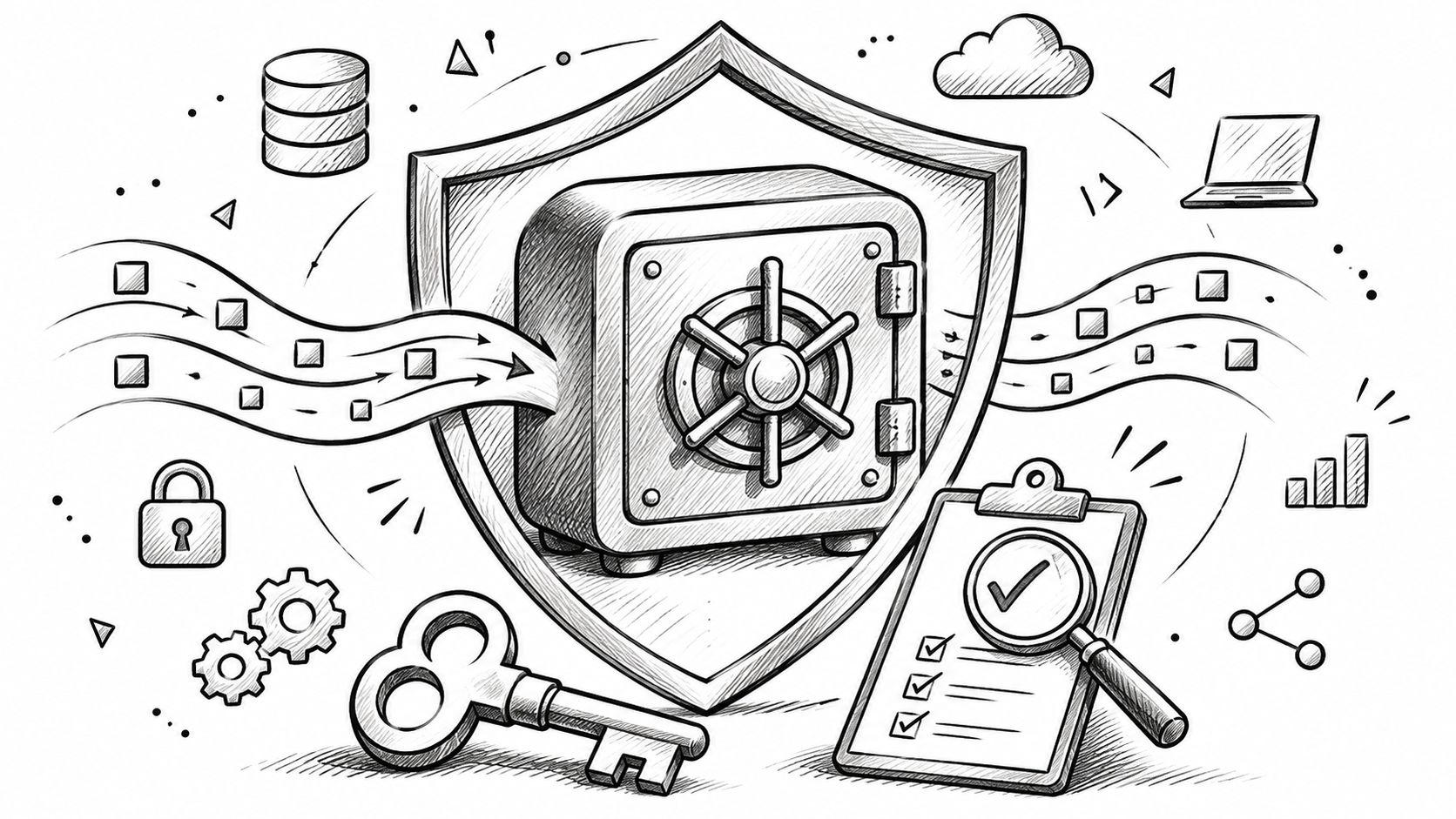
An agent can verify secret scans, dependency checks, input validation, authorization tests, and configuration changes. For a self-hosted deployment, have it inspect default credentials, published ports, container permissions, and whether administrative endpoints are exposed.
A human must approve trust boundaries, permission changes, sensitive-data handling, and exceptions. Record the generating agent, reviewing agent, versions, tools, and permissions so the review has a clear scope.
Test the forbidden action
For a model-powered feature, keep provider API keys out of source code and browser bundles. Inject them through server-side environment configuration or a secrets manager, and check that logs don't expose them.
Use the OWASP Top 10 as a starting prompt, then add application-specific abuse cases. For example, test whether a signed-in user can fetch another customer's export by changing its identifier.
A separate reviewer is an independent control, not proof that the change is safe.
Don't allow the generating agent to serve as the sole approver. Escalate authorization changes, public API changes, migrations involving sensitive data, and unresolved security findings to a named human.
5. Failure Modes and Error Handling
Ask what happens if a required service stays unavailable for an hour. Then follow the request through the queue, database, user interface, and recovery path.
Experimental evidence summarized in an IEEE software-engineering paper distinguishes between incorrect things that are present and necessary things that are missing. Checklist inspection was stronger at finding the former, while scenario-based reading found more omissions.
That makes failure review a good place to change tactics. Don't only inspect configured retries. Walk through an outage and identify every state the user and operator would see.
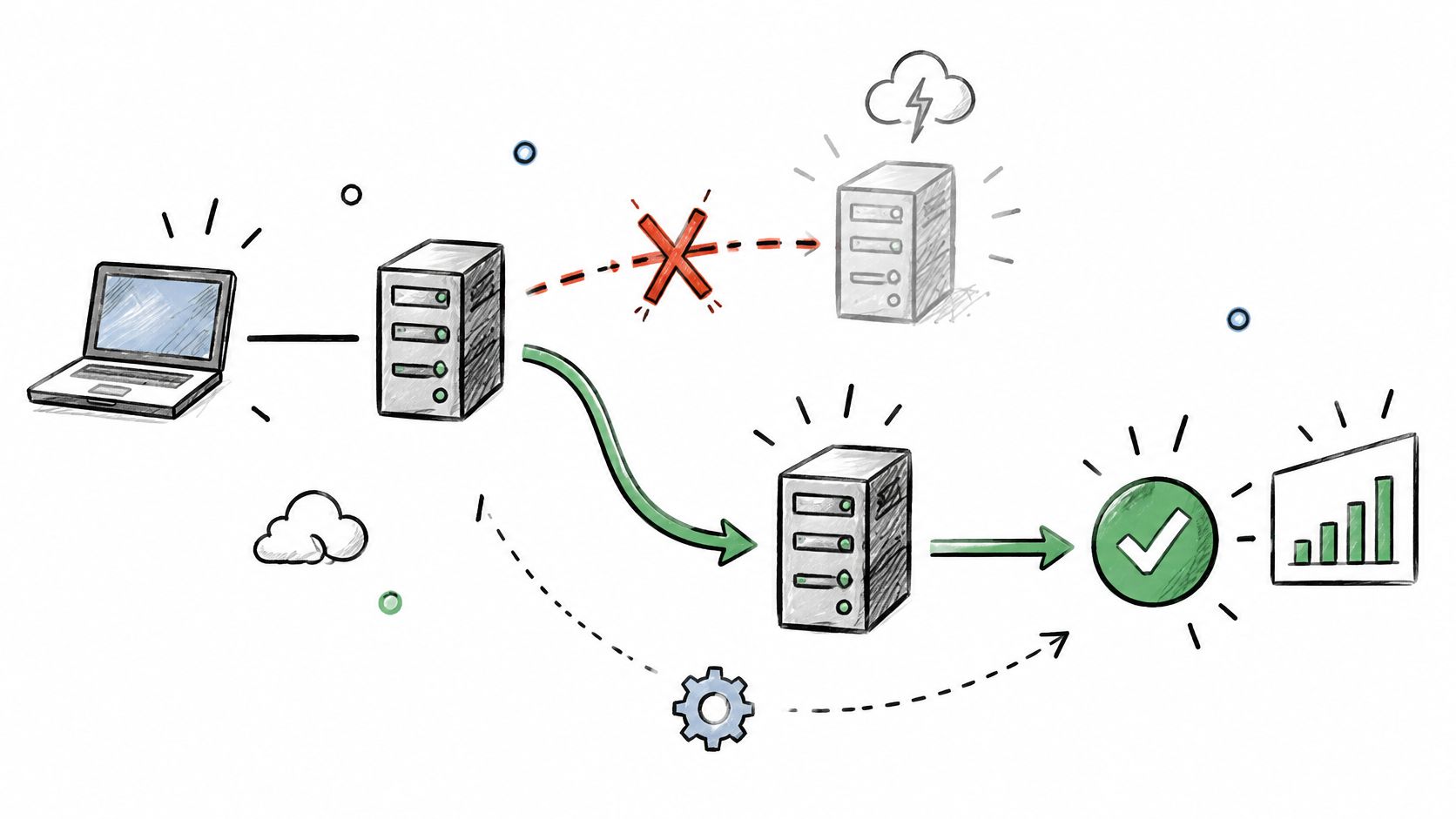
Run a compliance pass and a scenario pass
An agent can verify explicit timeouts, bounded retries, backoff, cancellation paths, error messages, and failed-job states. Ask it to trace what happens after a worker crashes between an external action and the database update.
A human must decide whether the fallback is acceptable. Serving stale data, refusing a request, and delaying completion are different product choices.
For a worker calling an external model API, retry temporary failures with backoff. When attempts are exhausted, record a visible failed or stuck state with a recovery action. Don't leave the task appearing to run forever.
- Duplicate delivery. Can retrying create a duplicate charge, notification, or record?
- Partial completion. Can the system distinguish finished work from work it must repeat?
- Recovery. Can an operator retry safely without editing production data by hand?
Approve the behavior only when both the technical recovery and the user-facing outcome are clear.
6. Testability and Test Strategy
A payment endpoint shouldn't require a live payment provider for every test. The design should expose a boundary where tests can supply a controlled response, including timeouts, declines, and duplicate callbacks.
NASA's design-review guidance for ground-support equipment includes inspection, testing, and performance validation alongside reliability and maintainability. Apply that principle to software: review how the team will prove the behavior, not just whether someone plans to add tests.
Define passing before implementation
An agent can verify that acceptance conditions have tests, test commands run, fixtures exist, and external dependencies can be substituted. Have it inspect assertions, not just filenames or coverage output.
A human must judge whether the tests represent the important risks. A passing test can still assert the wrong behavior, omit an abuse case, or rely on an unrealistic mock.
Build the strategy around the boundary being tested:
- Unit tests. Check business rules and state transitions without network access.
- Integration tests. Exercise database behavior, permissions, and dependency contracts.
- End-to-end tests. Prove critical user journeys in a representative environment.
- Preview review. Let a person inspect layout, wording, loading states, and error recovery before merge.
For the payment example, use a controlled provider adapter for deterministic failure tests and a suitable integration environment for contract checks. Don't treat either as a complete substitute for the other.
Keep test data repeatable and free of production secrets. Record the reviewed revision, environment, command, and result so the next reviewer can reproduce the evidence. A test plan passes when it explains what success means and how failure will be exposed.
7. Performance and Cost Efficiency
A model that finishes a review cheaply isn't necessarily the economical choice if its findings require repeated fixes. Compare the cost of completed, accepted work rather than the price of an isolated response.
Set a feature budget before implementation. Define acceptable response behavior, infrastructure assumptions, model usage, and what happens when a task exceeds its allowance. A budget without an enforcement or escalation path is only a note.
- Agent verification. Gather query plans, latency measurements, payload sizes, token usage, retry counts, and resource consumption from representative runs.
- Human checkpoint. Decide whether the measured quality and user experience justify the cost. Approve trade-offs such as delayed background processing or a less expensive model.
- Comparable evidence. Use the same task set, acceptance criteria, and review process when comparing alternatives.
Measure finished work
For a code-review workflow, compare models on their ability to find meaningful design violations without generating distracting findings. Include the cost of review, fix rounds, and reruns, not just the initial call. The LLM cost comparison guide is a useful starting point for structuring that decision.
Our analytics show cost per finished card, merge rate, fix rounds, and hours to merge, with experiments for comparing models. Use those measures together rather than selecting whichever produces the lowest bill.
Budget rule: Don't cut the review that protects a critical boundary just to make a task look cheaper.
For a web feature, inspect expensive queries and repeated model calls before adding infrastructure. Require measurement for the suspected bottleneck. Don't approve a cache until the design explains invalidation, stale results, and the extra operational work.
8. Observability and Maintainability
A worker can be running while every user task is stuck. A container health check alone won't tell an operator whether useful work is finishing.
NASA's software-architecture review guidance treats operability and verifiability as review concerns and tracks architectural issues identified versus closed. Apply that discipline to operational findings: attach an owner, evidence, severity, and disposition rather than leaving a comment that asks for better logging.
Make the failure diagnosable
An agent can verify structured logs, correlation identifiers, metrics, traces, health checks, and links to runbooks. It can also flag undocumented configuration, missing migration instructions, and changes that introduce unclear module responsibilities.
A human must confirm that an on-call engineer could understand the symptom and choose a safe response. Inspect a sample failure, not just the monitoring configuration.
For a self-hosted Docker Compose deployment, review logs and health checks for the web process, worker, and Postgres. Then trace a task from submission through execution to completion. The AI agent observability guide helps frame the agent-specific parts of that path.
- Alert on symptoms. Track failed user actions, stalled jobs, and growing queue age, not only internal exceptions.
- Protect log content. Include enough context to diagnose a problem without recording credentials or sensitive payloads.
- Keep recovery nearby. Store runbooks with the code and update them when deployment or recovery behavior changes.
Maintainability also needs a human reading the design. Ask whether the next engineer can locate the responsible component, understand its contract, and change it without guessing. Approve operational readiness only when someone can detect, explain, and recover from a meaningful failure.
How Each Design Review Check Compares
| Check | Best At Catching | Who Can Run It | Effort | When to Run |
|---|---|---|---|---|
| Requirements Traceability | Missing requirements and unplanned features | Product and engineering reviewers | Ongoing upkeep | Before coding and after design changes |
| Design Conformance to the Approved Spec | Drift between the approved design and implementation | Human reviewer or automated reviewer | Moderate; depends on design clarity | During implementation, before human review |
| Architecture and Scalability | Bottlenecks, tight coupling, and limits to future growth | Architects and senior engineers | Thorough review takes time | Before launch and major architectural decisions |
| Security Review | Weak access controls, unsafe data flows, and exposed secrets | Security specialists or security-trained engineers | Requires security expertise | During design and before launch |
| Failure Modes and Error Handling | Missing timeouts, retries, fallbacks, and recovery paths | Engineers and reliability reviewers | Moderate; failure paths add complexity | During design and before release |
| Testability and Test Strategy | Untestable boundaries and gaps in test planning | Engineers and QA or test specialists | Test infrastructure takes effort | During design, before implementation |
| Performance and Cost Efficiency | Slow response times, resource bottlenecks, and unexpected costs | Engineers, SREs, and cost owners | Estimates are moderate effort and uncertain | Before development and when choosing models or resources |
| Observability and Maintainability | Missing monitoring, unclear code, and outdated runbooks | Engineers, DevOps, and SREs | Ongoing documentation and monitoring effort | During design and throughout releases |
Run the Checklist on Your Next Card
Copy these checks into your design template, then apply them to a real card. Keep the order fixed so reviewers establish intent before debating implementation details.
For each check, record the evidence an agent can verify, the decision a human must make, and the named owner of that decision. A low-risk documentation change won't need the same depth as an authorization change, but mark a check as not applicable with a reason rather than skipping it.
Make failed checks change the workflow
Add a fix-round rule: a failed blocking check sends the design back instead of forward. The writer answers each finding with a change or a reasoned rejection, and the reviewer checks that answer against evidence.
- Freeze the reviewed version. Record the design and implementation revisions.
- Make findings actionable. Include location, risk, expected behavior, and supporting evidence.
- Require a disposition. Close the finding, accept the risk through the proper owner, or keep the card blocked.
- Recheck affected work. A design correction may require changes to code, tests, and operational instructions.
Avoid making every observation a blocker. Separate dangerous behavior and missing acceptance evidence from style preferences. Human attention belongs on decisions that change product intent, security, data integrity, or production risk.
A clean tech design can approve itself for every card type, including bug, tooling, and documentation cards. That automation should operate within configured workflow rules and escalation boundaries, not override a required human decision.
Publishing early is always allowed when speed matters more than completing the loop. Treat that as a deliberate bypass, not as evidence that review passed. Keep the remaining findings visible so the owner knows what still needs attention.
After the card finishes, inspect which findings led to useful fixes and which created noise. Refine prompts and acceptance evidence around those results instead of extending the checklist whenever something goes wrong.
The checklist exists to make reviews short and specific, not longer. Automate repeatable checks, preserve meaningful human decisions, and make every blocking finding clear enough for someone to fix.
Loupe connects product design, technical design, implementation, and review in a board-based workflow, with a second agent checking work before human checkpoints. Visit Loupe to put these checks into an agent-driven flow with traceable findings and fix rounds.